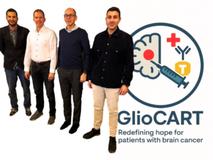
GlioCART: The Venture Leader Biotech targeting glioblastoma
07.05.2026 11:35
Rita Longobardi
Meet Patrice Zeis, co-founder of GlioCART. The biotech company is developing a dual-action CAR-T cell therapy for glioblastoma, targeting the tumor while reprogramming immune response to improve outcomes and reduce side effects. Patrice and the other nine Swiss National Biotech Team members will travel to Boston in June.
 Name: Patrice Zeis
Location: Basel, Switzerland
Nationality: German
Graduated from: University of Basel (MSc), University of Freiburg (PhD)
Prior role: Postdoctoral Scientist
Founding team members: 4
Number of employees: 4 (all co-founders)
Money raised: CHF 250K
What does your product or solution do, and what makes it unique?
At GlioCART, we develop next-generation CAR-T therapies for glioblastoma, one of the most aggressive and lethal brain cancers, with a median survival of ~15 months. Our CAR-T program is currently in IND-enabling development, to enter clinical trials in the near future. Our dual-action CAR-T cells target tumor cells while reprogramming the immunosuppressive tumor microenvironment, a key barrier limiting current therapies. By combining both mechanisms, our therapy has the potential to overcome antigen escape and enable durable responses in glioblastoma, where long-term benefit remains rare.
What trend or shift in your industry is currently creating the biggest opportunity for you?
While CAR-T therapies are clinically validated in blood cancers, their limited efficacy in solid tumors is driving a shift toward next-generation, “armored” designs that address antigen escape and the immunosuppressive microenvironment. GlioCART stands out with a dual-action approach that combines direct tumor killing with reprogramming tumor-associated macrophages into tumor-killing cells.
How did the idea for your startup originate?
GlioCART originated from academic CAR-T research in our laboratory and the recognition that, despite promising preclinical results, effective translation into glioblastoma patients remains limited. Embedded in the Basel biotech ecosystem, we saw an opportunity to advance next-generation CAR-T approaches that address key barriers in glioblastoma and translate them from academia into clinical application. This led us to found GlioCART, bringing our approach closer to patients.
Which market are you addressing, and what potential do you see for your startup in that market?
GlioCART targets a high-value orphan oncology market in glioblastoma, a disease with extremely limited treatment options, high unmet medical need, and growing incidence. The market is expected to grow substantially over the next decade, while orphan drug designation enables premium pricing. GlioCART’s dual-action CAR-T platform has the potential to expand to additional targets within glioblastoma as well as other solid tumors, creating an even larger long-term market opportunity.
What impact do you want your technology to have five years from now?
Within the next five years, we aim to establish a new treatment option for patients diagnosed with glioblastoma, a disease that has seen little therapeutic progress in over two decades and remains devastating for patients and their families. Our goal is to enable durable responses, significantly extend survival, and redefine hope for patients with glioblastoma.
What major challenges have you faced so far?
The main challenge has been translating a promising therapeutic concept into a viable and investable company. This included defining a clear development strategy, establishing a robust IP position, and shaping a compelling business case around a complex and high-risk therapeutic area. We have addressed these challenges by building a focused team and securing initial funding to advance GlioCART.
What motivates you on tough days?
What motivates me most on tough days is that patients face a devastating diagnosis with very limited treatment options, and knowing that our CAR-T cells have the potential to change that gives me a strong sense of purpose. At the same time, I am driven by the challenge of building something meaningful in a difficult indication and by the opportunity to turn a promising scientific concept into a therapy that can truly impact patients’ lives.
Why did you decide to join the Venture Leaders Roadshow, and what are you most excited about?
We decided to join the Venture Leaders Boston program to connect with the US biotech ecosystem at a critical stage of GlioCART’s development. As we move toward clinical translation and prepare for future US market entry, access to leading investors, partners, and experts in cell therapy is highly valuable. I am particularly excited to engage with experienced biotech entrepreneurs and investors, gain feedback on our strategy, and build long-term relationships that can support GlioCART’s next phase of growth.